Reviewing the I Teach My Kid to Hit Steal SVG for Embroidery
As a designer who spends half my life staring at digitized files and the other half pulling bobbins out of tangled messes, I have learned that not every graphic translates well to thread. We live in an era where Crafts and digital design intersect constantly, but the gap between a crisp vector line on a screen and a stitched reality on fabric is often wider than clients expect. Recently, I pulled up the I Teach My Kid to Hit Steal SVG to evaluate its potential for a upcoming batch of custom apparel orders. This wasn’t just a casual browse; I needed to know if this specific Graphics asset could hold up under the needle of a commercial embroidery machine while maintaining the humorous, bold attitude the phrase implies.
First Impressions: Mood and Visual Personality
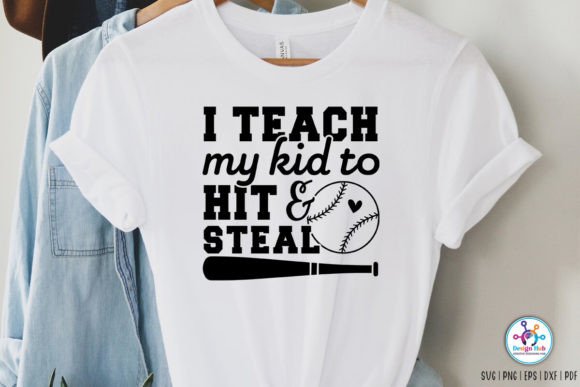
The first thing that strikes you about the I Teach My Kid to Hit Steal SVG is its unapologetic directness. The typography usually associated with this type of sports-themed humor tends to be blocky, athletic, and high-contrast. When I loaded the file into my editing software, the lines appeared clean, which is a promising sign for any machine embroidery design. The mood is playful yet competitive, tapping into the culture of baseball or softball parents who are deeply invested in the game. It feels less like a delicate nursery decoration and more like a statement piece for a dedicated fan.
For an embroidery project, this visual personality dictates the approach. You cannot stitch this with subtle, pastel threads and expect it to land. The design demands presence. It belongs on items that are meant to be seen from a distance—bleachers, dugouts, and family gatherings. The layout suggests a need for strong structural integrity in the digitizing, particularly if the letters are thick enough to support fill stitches without becoming overly dense.
Real-World Application: The Sweatshirt Test
To truly understand the value of this embroidery file, I imagined a specific real-life scenario. A client approaches me for a set of matching family outfits for a weekend tournament. They want something durable, comfortable, and funny. The I Teach My Kid to Hit Steal SVG is perfect for a sweatshirt embroidery project. Why? Because sweatshirts provide the necessary stability for larger text designs.
When placing this design on a hoodie or crewneck, the fabric’s weight supports the stitch count. I visualized the design centered on the chest or slightly offset to the left breast. On a dark navy or heather gray fleece, the contrast would be sharp. However, this is where practical judgment comes in. If the original SVG features thin serifs or intricate details, they might get lost in the pile of the fleece. As a reviewer, I look at the shapes in the digital embroidery file and ask: will these curves turn into jagged edges when stitched at 4mm height? If the design relies heavily on satin stitch borders, it will pop beautifully against the textured background. If it uses complex fill stitch patterns, I would need to ensure the density isn't so high that it creates a cardboard-like stiffness on the garment.
Versatility Across Product Lines
Beyond sweatshirts, this design has legs in other areas of the craft business. Consider a heavy canvas tote bag design. Parents often carry gear bags filled with gloves, bats, and snacks. Embroidering this phrase onto a sturdy tote adds a layer of personalization that printed vinyl simply cannot match. The texture of the thread elevates the handmade product, making it feel premium rather than mass-produced.
It also works well for custom apparel like performance tees, provided the design is scaled down appropriately. For smaller items, such as a baby embroidery onesie, caution is required. The phrase is humorous, but the physical size of the text must be reduced significantly. This brings us to the technical limitations.
Technical Constraints and Careful Usage
While the I Teach My Kid to Hit Steal SVG is versatile, it is not universal. There are specific scenarios where I would advise against using it, or at least proceeding with extreme caution. First, consider hoop size. If you are working with a 4x4 hoop, you may need to split the design or reduce it to a point where legibility suffers. Small lettering on textured fabrics like terry cloth towels or pique polo shirts can become unreadable if the stitches bridge the gaps in the fabric weave.
Second, think about stitch density. Sports apparel is often made of synthetic, stretchy materials. A dense embroidery design can cause puckering, ruining the sleek look of a jersey. If you plan to use this on a cap, the curved surface presents another challenge. The design must be short and wide to fit the front panel without distorting. Long phrases often need to be arched or broken into two lines to accommodate the limited vertical space of a hat.
Furthermore, if the SVG includes very fine details, they may not translate well to an applique design format unless you are adding fabric layers. For dark fabrics, you must ensure your thread colors have enough contrast. A white thread on black cotton is classic, but if the design has subtle shading, it might disappear. Always test your thread colors on scrap fabric before committing to the final finished product.
Enhancing Brand Value and Customer Trust
For Etsy sellers and small shop owners, the choice of design directly impacts perceived value. Using a high-quality, well-digitized version of the I Teach My Kid to Hit Steal SVG signals professionalism. Customers can tell when embroidery is sloppy—when threads loop, when registration is off, or when the backing shows through. A clean, crisp execution of this phrase builds trust. It suggests that the maker cares about quality, which encourages repeat business.
This design also aids in brand consistency for shops specializing in sports-themed goods. It fits naturally alongside other athletic motifs, creating a cohesive collection. Whether used for holiday embroidery gifts for coaches or personalized gift items for team moms, the relatability of the phrase drives engagement. People share photos of funny, well-made items on social media, providing organic marketing for your small shop product.
Practical Notes for the Embroidery Designer
Before you load this file into your machine, take a moment to review the technical specs. The product description notes that the I Teach My Kid to Hit Steal SVG comes in SVG, PNG, EPS, PDF, and DXF formats. This is excellent for versatility, allowing you to use it for both cutting machines and embroidery software. However, remember that an SVG is a vector graphic, not necessarily a pre-digitized embroidery file (like PES or DST). You will likely need to digitize it yourself or convert it using specialized software.
- Test on Scrap Fabric: Always run a test stitch-out on the same material you plan to use for the final item. Check for puckering and thread breaks.
- Check Stabilizer: Use a cut-away stabilizer for stretchy fabrics like t-shirts and a tear-away for stable wovens like tote bags. This ensures the embroidery project remains flat.
- Inspect Small Details: Zoom in on your digitizing software. Are there too many nodes? Simplify paths to reduce unnecessary needle penetrations.
- Contrast Check: View your design in black and white to ensure the shape is recognizable without color reliance.
- Licensing Verification: Confirm the license terms. Can you sell finished physical items? Can you resell the digital file? Most craft licenses allow for physical sales but prohibit digital redistribution.
In conclusion, the I Teach My Kid to Hit Steal SVG is a strong contender for sports-themed collections. It offers a blend of humor and athletic pride that resonates with a specific audience. By respecting the technical limits of embroidery—managing density, choosing the right fabric, and ensuring proper stabilization—you can transform this digital asset into a high-value, tangible product. Whether for a commercial embroidery run or a single personalized gift, this design rewards careful attention to detail with a professional, eye-catching result.